Net Hype Reloaded: The 5 Entertainment Waves Owning 2025 Right Now
Every time you open your phone, it feels like the internet has invented a whole new genre of chaos. In 2025, entertainment isn’t just something you watch — it’s something you duet, remix, green-screen, and speed‑run. From AI‑crafted pop moments to fandoms rewriting Hollywood from their laptops, your feed is basically a live event now.
Let’s lock in on five waves that are actually shaping what we watch, listen to, and meme about — the stuff people aren’t just scrolling past, but stitching, saving, and sending to the group chat.
1. AI-Boosted Performances Are the New Remix Culture
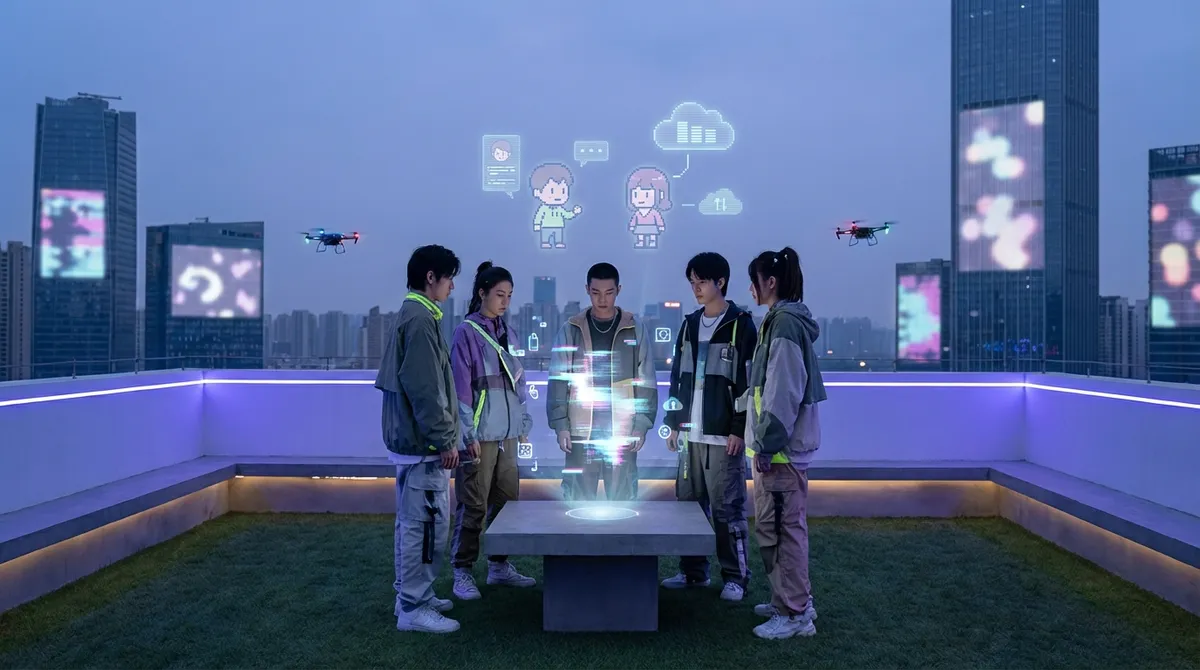
AI isn’t just lurking in your recommendations anymore — it’s jumping right into the performance. We’re seeing live shows where artists trigger AI visuals in real time, fandoms using AI tools to re-cut trailers and music videos, and producers turning rough voice notes into fully produced demos overnight.
Big labels are experimenting with AI-assisted mastering, while indie creators are using open-source tools to build entire fictional universes on a laptop. But the key shift? Fans are now co-creators. Edits, fan cams, AI stylized clips — they’re not just fan art; they’re part of how entertainment spreads and gets discovered.
At the same time, there’s a major conversation about consent and control: artists pushing back against unauthorized AI clones of their voices, studios drawing lines around what’s allowed, and platforms rolling out new watermarking and label systems. The next wave of “viral” might be less about pure novelty and more about who’s using AI with the artists, not against them.
2. Watch Parties Are Back — But They Live on Your Phone
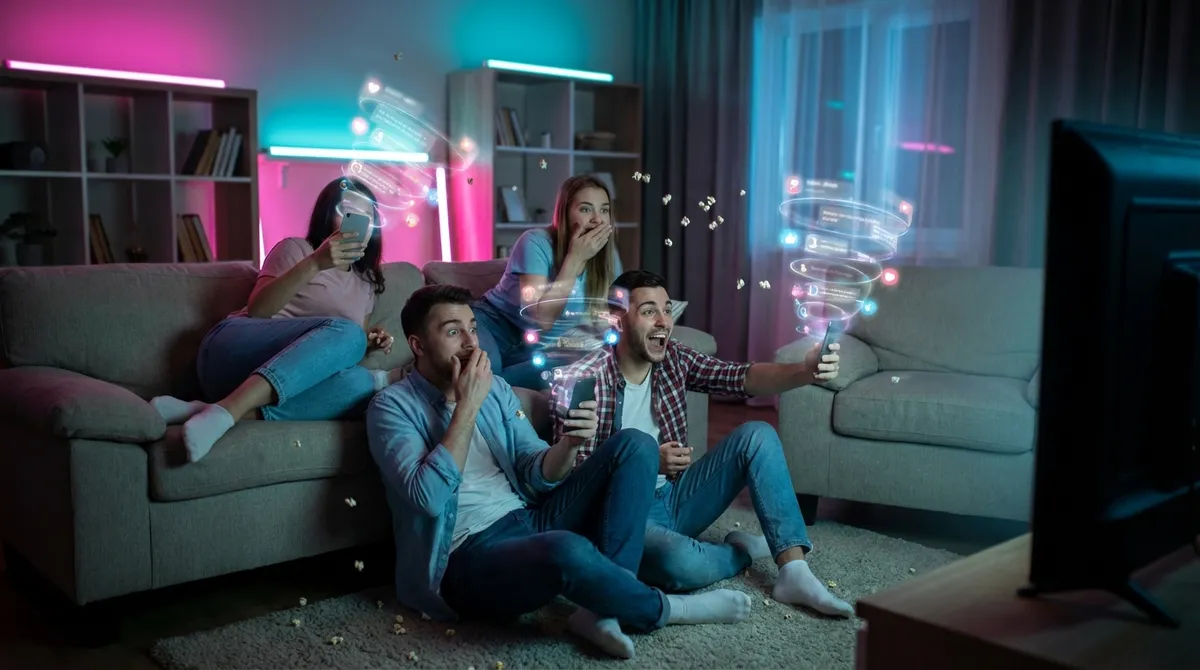
The group chat has basically become a 24/7 digital living room. Instead of waiting for one big weekly show, everyone’s watching different things at once — and syncing up through clips, threads, and live comments. TikTok and YouTube shorts are now the “trailer park” for everything: movies, K‑dramas, anime, docuseries, even niche reality shows you’d never discover the old-school way.
Fan-led “micro premieres” are huge: people schedule drop times for new music videos, episode recaps, or creator collabs and treat it like an event. Platforms are leaning into co-watching features, synchronized streams, and live chats that make every release feel like a mini festival.
What’s wild is how fast this impacts what gets renewed or canceled. A show might look quiet in old-school ratings but be absolutely everywhere in stitched reactions, edits, and meme formats. If your series doesn’t generate instantly recognizable reaction faces or quotable soundbites, it’s at risk of vanishing from the collective timeline.
3. Fandoms Are Running the Marketing Department Now
If you want something to blow up in 2025, you don’t just cut a trailer — you activate a fandom. Fan bases are running highly coordinated campaigns: streaming parties to boost numbers, hashtag storms to resurrect canceled projects, meme campaigns to push a sleeper hit into mainstream visibility.
We’re in the era where a passionate fandom can drag an old track back onto the charts, turn a niche international drama into a global obsession, or force a studio to acknowledge demand for a sequel. Stan culture has evolved from pure reaction into strategy: people track chart placements, engagement analytics, and even time zone coordination like mini PR teams.
Of course, there’s a darker side — pile-ons, harassment, and toxic wars between fan groups are still a concern. But some fandoms are intentionally shifting towards “soft power” moves: charity drives in their fave’s name, fan-organized screenings, and collaborative projects that show brands and studios they’re not just loud — they’re valuable.
4. Short-Form Chaos Is Quietly Deciding Long-Form Hits
The shortest clips are now the most powerful marketing tools. One 9-second sound bite can send a song, a show, or a movie into the algorithmic stratosphere — and everyone in entertainment knows it. Directors are thinking about “clipable” moments. Artists are designing hooks and bridges that feel made for looping. Reality TV segments are basically crafted to be reaction GIFs in motion.
This isn’t killing long-form content; it’s feeding it. People discover a track through a dance challenge, then spiral into the full album. They see a spicy edit from episode 7, then binge the whole season in a weekend. Documentaries gain traction when one jaw-dropping fact or quote becomes a viral stitch template.
The flip side: if a project doesn’t generate any short-form momentum, it can feel invisible, even if it’s quietly excellent. That’s pushing creators to think “multi-format” from day one — how does this scene read as a 2-hour experience and a 12-second punch? In 2025, if your story doesn’t fragment beautifully, it might not travel far.
5. IRL Meets URL: Pop-Up Moments Designed for the Feed
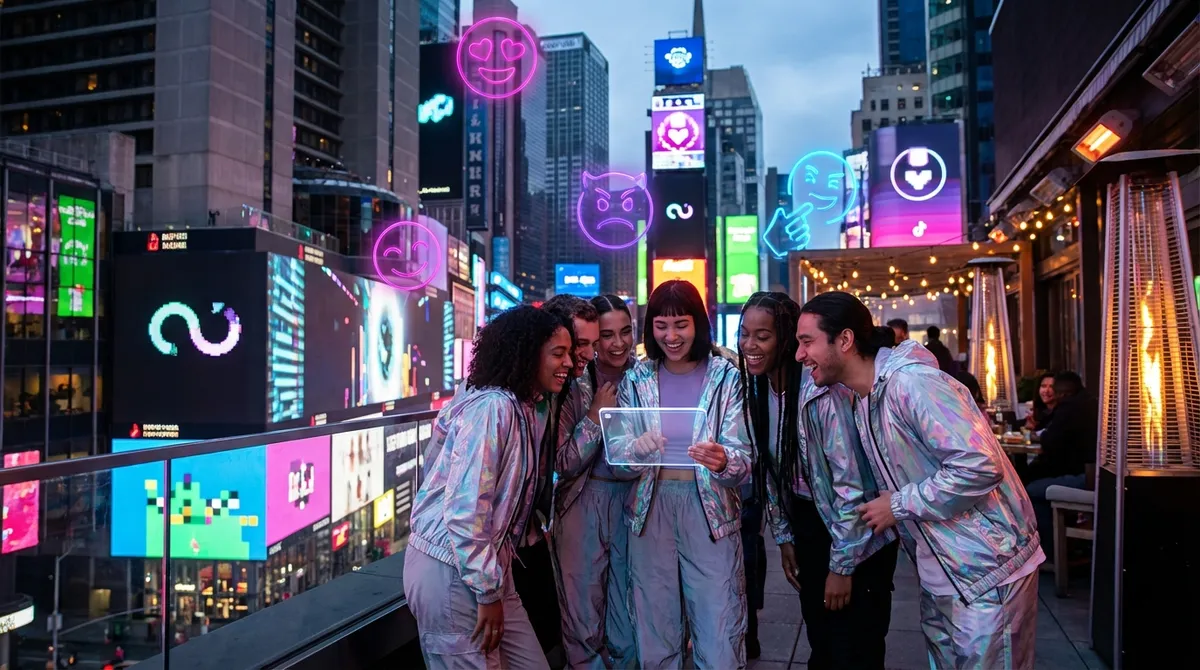
The line between “event” and “content” has completely dissolved. Concerts, premieres, festivals, and even random pop-ups are being staged with cameras in mind first. LED tunnels, AR filters that unlock only at certain locations, projection shows on buildings — it’s all built to be filmed, posted, and re-posted.
Pop stars are dropping surprise micro-shows in public spaces, knowing they’ll be captured from 50 angles and stitched into a single viral moment. Brands are sponsoring immersive experiences that double as selfie factories. Theme parks and museums are designing spaces specifically for social video — you’re meant to walk in, gasp, and immediately hit record.
What’s new is how fans are shaping these events in real time. Crowd chants becoming official tour bits, fan-made signs turning into running jokes, spontaneous audience interactions going viral and influencing later shows. The performance doesn’t end when you leave the venue; it keeps living as edits, POV videos, and recap reels that make everyone else say, “Okay, I need to be at the next one.”
Conclusion
Entertainment in 2025 isn’t something you sit back and consume — it’s something you co‑produce just by showing up, clipping, sharing, and reacting. AI is remixing the rules, fandoms are steering the ship, short-form chaos is choosing the long-form winners, and every event doubles as a content farm.
If you want to stay ahead of the curve, don’t just ask, “What’s trending?” Ask, “What are people doing with it?” The next big wave won’t just be what you watch — it’ll be how you flip it, stitch it, and send it rocketing across every feed you touch.
Sources
- Billboard – How TikTok Continues to Reshape the Music Charts – Explores how short-form video drives song virality and chart performance
- The New York Times – As A.I. Enters the Music World, Artists See Both Threat and Opportunity – Covers the rise of AI-assisted music and the debates around consent and creativity
- BBC – The Rise of Fandom Power in Modern Entertainment – Looks at how fan communities influence what gets made, renewed, and promoted
- Pew Research Center – Social Media and the Changing Landscape of Entertainment – Discusses how social platforms shape what people watch and share
- Variety – Why Live Events Are Being Designed for Social Media First – Examines the trend of concerts, premieres, and pop-ups built to generate viral content